In this article
Dementia care at Bridge House, briefly
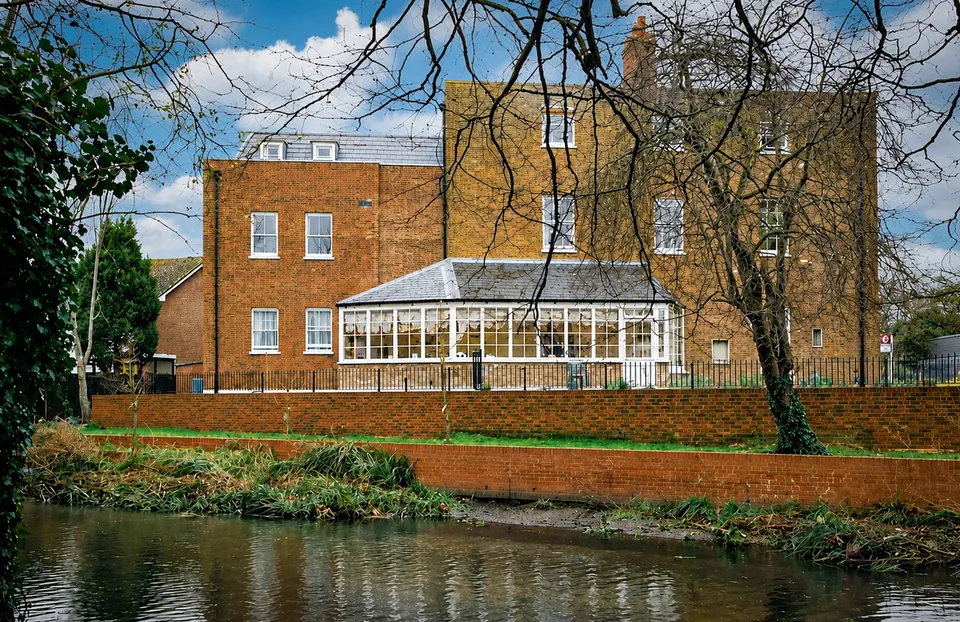
Bridge House is a 36-room nursing home on London Road in Wallington, in a refurbished Grade II listed building opposite Beddington Park. Registered nurses are on duty 24 hours and the team is dementia-trained, so a person can be supported here at different stages of the condition, including where it sits alongside other health problems.
Why a small home helps
Some people with dementia cope better in a building they can learn, and a home of 36 is easier to get to know than a large unit. The well courtyard, the conservatories with their raised flower beds and the patio by the river give people somewhere to sit and something to look at.
Nursing dementia care or residential dementia care
Residential dementia care means care staff, with district nurses and the GP coming in when needed. Nursing dementia care means a registered nurse on site around the clock. That matters when dementia comes with diabetes, swallowing problems or skin at risk, or when someone's health can change quickly. If a social worker or St Helier Hospital has recommended nursing care, start with nursing homes. Families told residential is enough may still want to ask what would happen as needs increase.
How we care for the person, not the diagnosis
Care starts with the person, not the diagnosis. We collect a personal history on admission, with the family's help, covering work, family, faith, favourite food and music, and everyday routines. It shapes the reminiscence activities and helps carers understand behaviour that might otherwise seem puzzling. See more about daily life at Bridge House.
Calm routines can help people feel safe: familiar rituals, phone calls with family, favourite television. Alongside them, the team helps with communication, nutrition, mobility and personal care, and those needs are reviewed as they change. Quizzes, word games and group discussion can keep people engaged for as long as they enjoy them.
Advanced dementia and the end of life
When dementia advances, the person may need help with swallowing, positioning and pressure areas, and may show discomfort through a look rather than words. Our advanced dementia care provides added support as needs change, working with NHS palliative professionals, hospice teams and community nurses when comfort becomes the priority. If assessed needs call for it, one-to-one care with dedicated staff can be agreed for set hours.
Families and visiting
A relative of someone with dementia often knows things no care plan can capture, so tell us what you notice and what works. Relatives are involved in care planning and reviews. Ask how we will contact you about falls or changes in health, and what time of day suits a visit. A short, regular visit on the patio can be easier for the person than a long one.
Questions to ask any dementia home in Sutton
- Is there a registered nurse in the building through the night?
- What would make you ask my relative to move, and could they stay to the end of life?
- Who records the person's life story and how is it passed to new staff?
- How do staff respond to distress before anyone thinks about medication?
- How are sedatives and antipsychotics reviewed, and who is involved?
- How are residents helped outdoors, given the river and the road nearby?
- How does a listed building affect access to rooms, lifts and bathrooms?
- What did the most recent CQC report say, and what has changed since?
Paying for dementia care in Sutton
NHS funding does not follow automatically from a dementia diagnosis. NHS-funded nursing care (£267.68 a week in 2026/27) is paid to the home when someone is assessed as needing a registered nurse, and NHS Continuing Healthcare covers the full fee for those with a primary health need. The London Borough of Sutton means-tests any remaining cost, using capital limits of £23,250 and £14,250, and the value of a home can be disregarded for twelve weeks or deferred in certain cases. Our Sutton funding guide explains each step.
Visiting Bridge House
Bridge House is at 280 to 282 London Road, Wallington SM6 7DJ. Book a visit through the tour form or call 020 8647 8419. If the person can come with you, watch how they react to the staff and the garden, as that can tell you more than a brochure.
Where to go next
Sources: Alzheimer's Society · Dementia guide (NHS) · Care Quality Commission · London Borough of Sutton
A question about care? Our team is here to help.
Talk to our team